Rendering Styles for Interiors: 6 Looks and How to Brief Them
Rendering styles are why two images of the identical room can feel like different places: the styling and the light carry as much as the geometry. Choosing the style up front, and briefing it clearly, is how you get an image that matches your intent on the first draft instead of the third. Here are the six styles we're asked for most and when each fits. When you're ready, our interior rendering service can produce any of them.
By the Smart 3D Render studio · Published · Updated
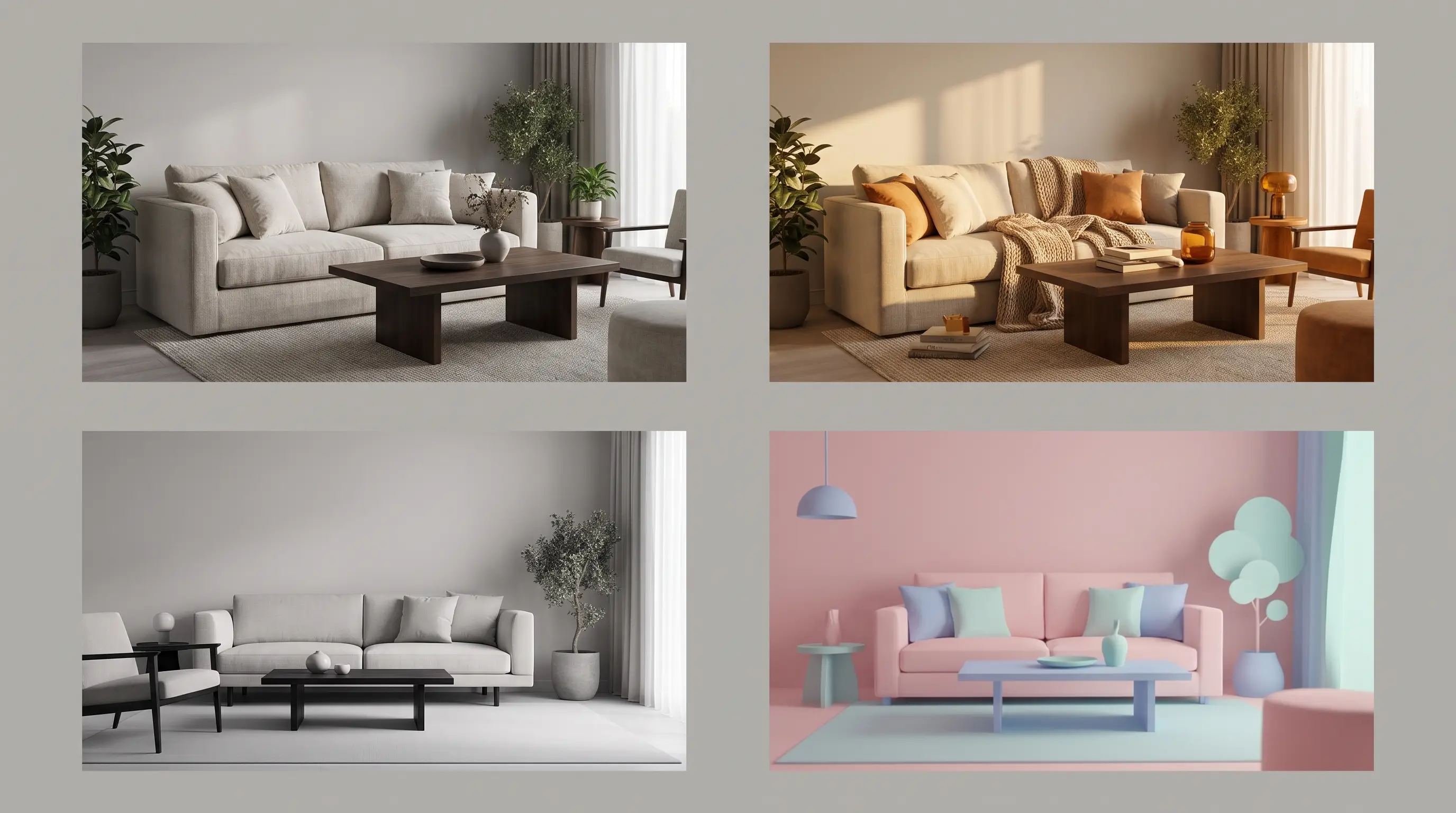
1. Photoreal
The default for sales and marketing: indistinguishable from a photograph, with accurate materials, natural light, and lived-in props. Best when believability closes the deal, property listings, developer marketing, and hospitality where the guest needs to trust what they'll get. It is the standard for 3D interior rendering ordered for sales.
2. Warm & lifestyle
Photoreal with the emotional dial turned up, golden light, soft textiles, a coffee cup on the counter, a throw casually draped. It sells a feeling rather than a floor plan and performs beautifully for residential and boutique hospitality, where aspiration drives the decision. The same look is what virtual home staging gives a photograph of an empty room.
3. Editorial & minimal
Cooler, cleaner, magazine-styled, restrained props, generous negative space, and a single hero material doing the talking. Ideal for design-led brands and portfolios where the architecture itself is the statement and clutter would cheapen it.
4. Stylised & conceptual
Deliberately not photoreal, flatter light, illustrative textures, or a pastel palette. Useful early in design to communicate intent without implying finality, and for brands with a distinctive graphic identity that a photoreal render would flatten.
5. Dusk & mood lighting
Less a separate style than a lighting layer you can apply to any of the above: warm interior lamps glowing against a deep evening sky. Dusk interiors consistently drive the most engagement on listings because the glow reads as cosy and inhabited. Pairing a bright daytime render with a dusk variant of the same room is a proven one-two for marketing. A dusk version of a view already made is a further image of the same scene, which costs 40% less than the first; the 3D rendering prices list the rest.
6. Technical & white-model
Clean, near-monochrome renders that prioritise form, layout, and scale over finish, closer to a design study than a marketing image. They're useful for early client reviews and planning contexts where you want the space understood, not sold.
How to brief an interior rendering style
Words are slippery; images aren't. The fastest way to get the look you want is to send two or three reference renders or photos and say what you like about each, the light in one, the styling in another, the palette in a third. That single step aligns everyone before a pixel is rendered and is the difference between a first draft that's close and one that's miles off. For examples of each style in our own work, see the interior rendering portfolio.
Once the look is chosen, the interior rendering service produces the room in it, from a sketch, a moodboard or a CAD file.
3D interior rendering services