3D Rendering vs Photography vs Virtual Staging for Real Estate
3D rendering vs photography is the wrong question until you know which of three overlapping tools a listing actually needs: photography, 3D rendering or virtual staging. Knowing which to reach for saves money and sells faster. If the property is off-plan or unbuilt, the choice is made for you, real estate rendering is the only option, but for finished homes it's a genuine decision.
By the Smart 3D Render studio · Published · Updated
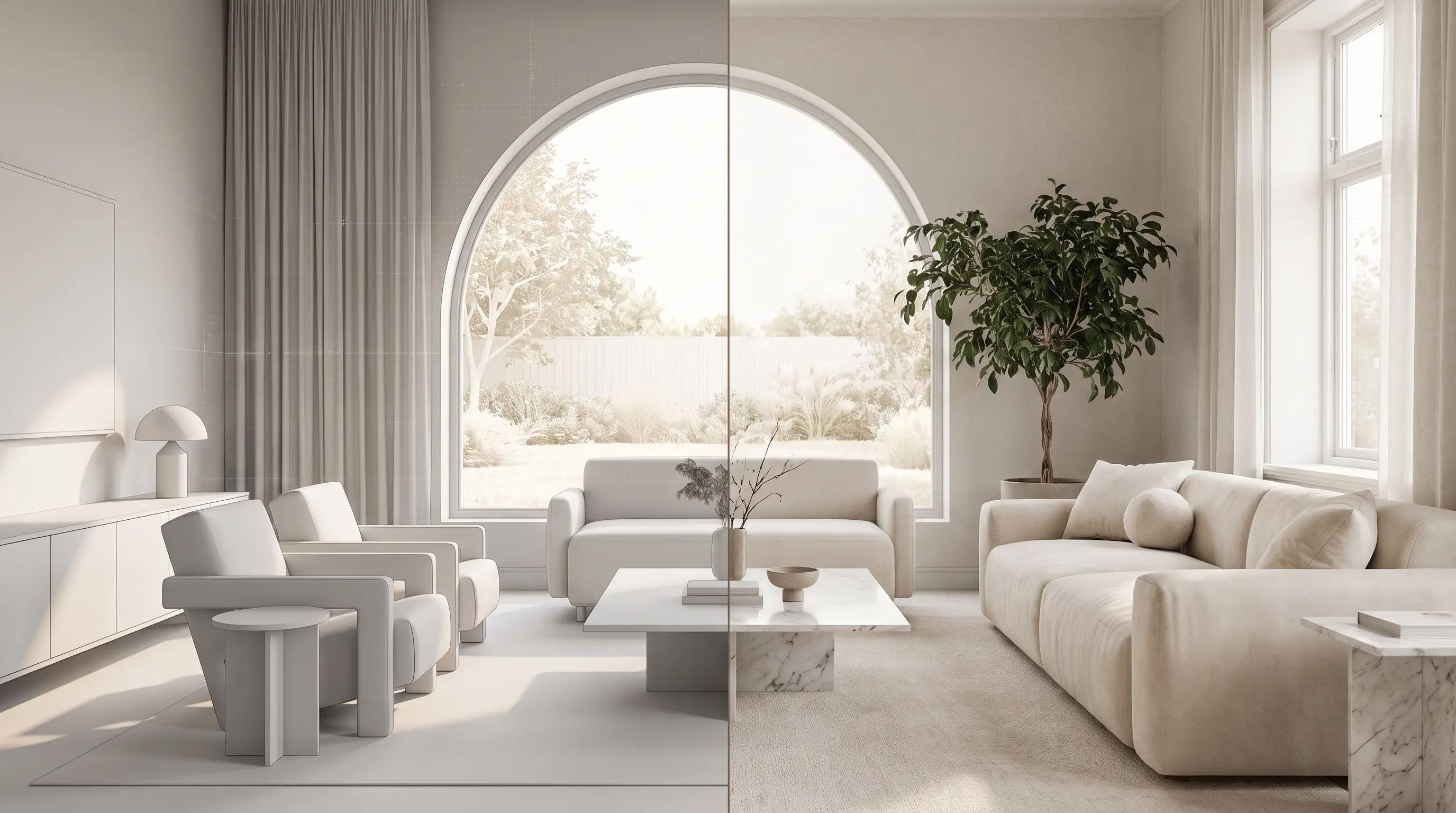
The three tools, quickly defined
- Photography, captures a real, finished space with a camera. Fast, trusted, unbeatable when the home exists and looks its best.
- 3D rendering, builds the space in 3D and generates images of it, including spaces that don't exist yet or aren't finished.
- Virtual staging, takes a real photo of an empty room and digitally adds furniture and decor.
What virtual staging is (and what it isn't)
Virtual staging starts from a real photograph of an empty or dated room and digitally furnishes it, sofas, art, rugs, lighting. It's cheaper and faster than physically staging a home, and dramatically more effective than listing bare rooms, because buyers struggle to judge scale and purpose in an empty space. What it can't do is change what the camera captured: the walls, windows, floors, and light are fixed. If the room itself needs to change, or doesn't exist yet, you need rendering, not staging. Virtual home staging costs $39 a photo at this studio, and changing the room's finishes is virtual renovation at $79.
3D rendering vs photography: when each wins
Photography wins whenever the property is real, finished, staged, and shot in good light, buyers trust photos implicitly. 3D rendering pulls ahead the moment reality gets in the way: the building isn't built, the unit is empty, the season is wrong, or you need to show finish options the buyer can choose. Rendering also presents every unit type in a development at identical quality, which photography of a single show home can't. Off-plan units are usually shown with 3D floor plans beside the views.
- Off-plan and pre-construction, nothing exists to photograph, so rendering is the only choice.
- Empty or unfinished units, render furnished instead of shooting bare rooms.
- Multiple finish options, show every palette without redecorating.
- Perfect light on demand, no waiting for golden hour or good weather.
Virtual staging vs 3D rendering
The line is simple: virtual staging edits a real photo; 3D rendering builds the scene from scratch. Staging is cheaper and faster when the room exists and only needs furniture. Rendering is the answer when you need to change the architecture, show an unbuilt space, present multiple layouts, or produce a full coordinated marketing pack. Many developments use both, rendering for the off-plan launch, staging or photography once show homes are built. Both are among the 3D rendering services this studio sells at published prices.
Cost and speed compared
| Approach | Relative cost | Needs the space to exist? |
|---|---|---|
| Photography | Low (per shoot) | Yes, finished & staged |
| Virtual staging | Low per photo | Yes, but can be empty |
| 3D rendering | Modelling + cheap variants | No |
Which should you use?
- Finished, staged home → photography.
- Real but empty room, architecture unchanged → virtual staging.
- Unbuilt, off-plan, or needs design changes → 3D rendering.
- A whole development to sell before ground breaks → a coordinated rendering pack.
A note on disclosure and MLS rules
Virtually staged and rendered images should be clearly labelled as such, many MLS platforms require it, and buyers rightly expect honesty. Good practice is to mark enhanced photos “virtually staged” and to pair off-plan renders with a note that finishes are indicative. Transparency protects the sale; a buyer who feels misled at viewing is a buyer you've lost. When in doubt, disclose.
When the property is not built or not furnished yet, the images are rendered, and the real estate rendering service produces them as one coordinated set.
Real estate rendering service